w r i t 3 4 0
Game Inspiration for Stuck In Irons
|
March 13th, 2026 - Introduction
I have yet to find a video game that labels itself as both cozy and horror. I mean, honestly, what does that even mean? You get scared, but you have fun doing it? You feel comforted by the horrors occurring all around you? I can think of a few ways such a strange scenario could play out, and I plan to develop a game to see what I can do with this esoteric genre mashup. In a different vein, many games use themes of horror and water, or horror and fishing, or horror and sailing. Sailing is pretty cozy when all the conditions are right: plot the course, anchor up, sails down, and hope you don’t get stuck in irons. Being stuck in irons is when the wind is going directly towards you, so there’s no forward lift, and you’re just unable to move. So that's the game idea. A cozy horror sailing game where you plot your course to different points of interest, direct your crew with various deck commands, and explore your boat as its captain. Pretty cozy, right? Oh yeah, and all of your electronics have stopped working, so you’re stuck on the open ocean with no lines of communication, no motor, and no land for miles. This is Stuck in Irons.
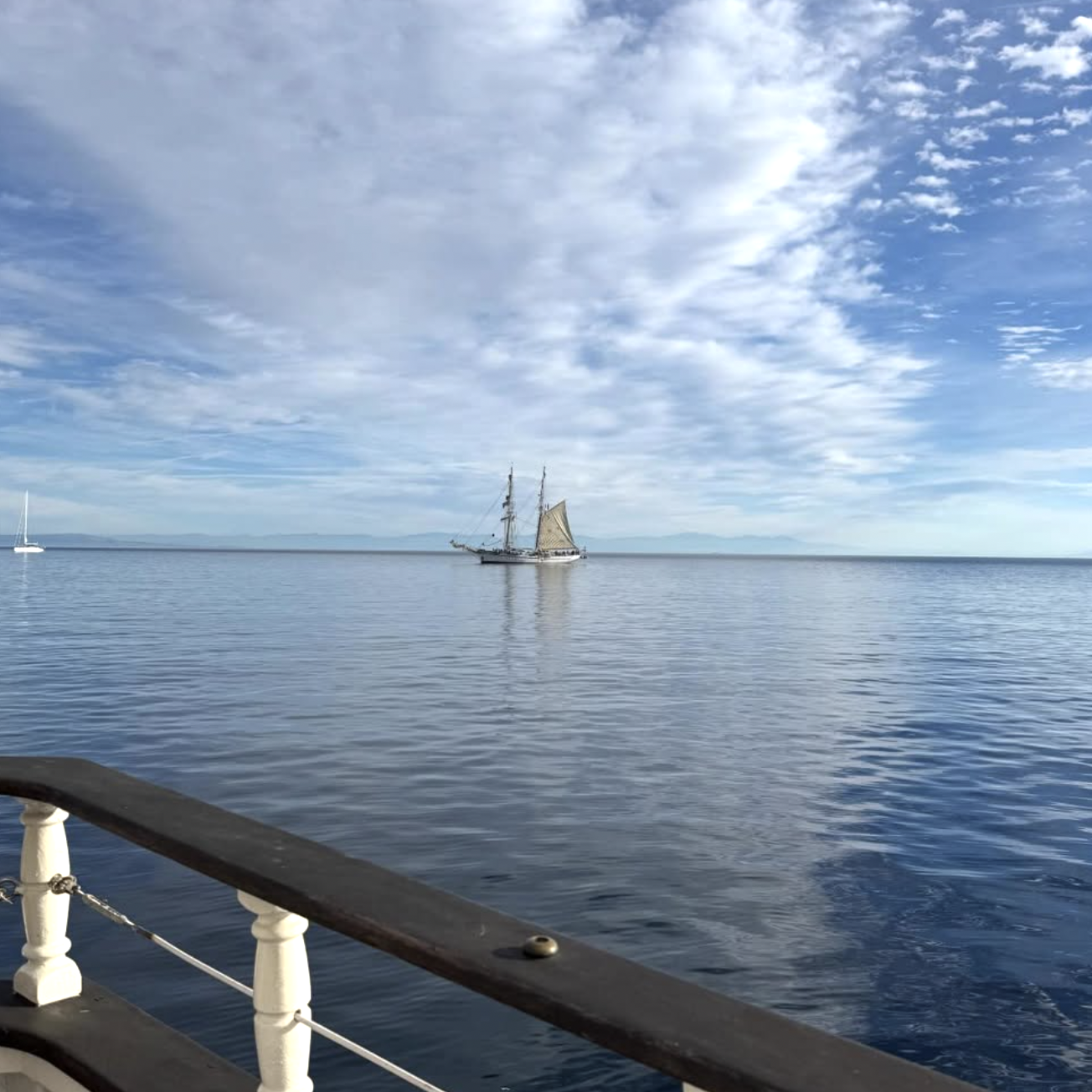 The brigantine Irving Johnson. 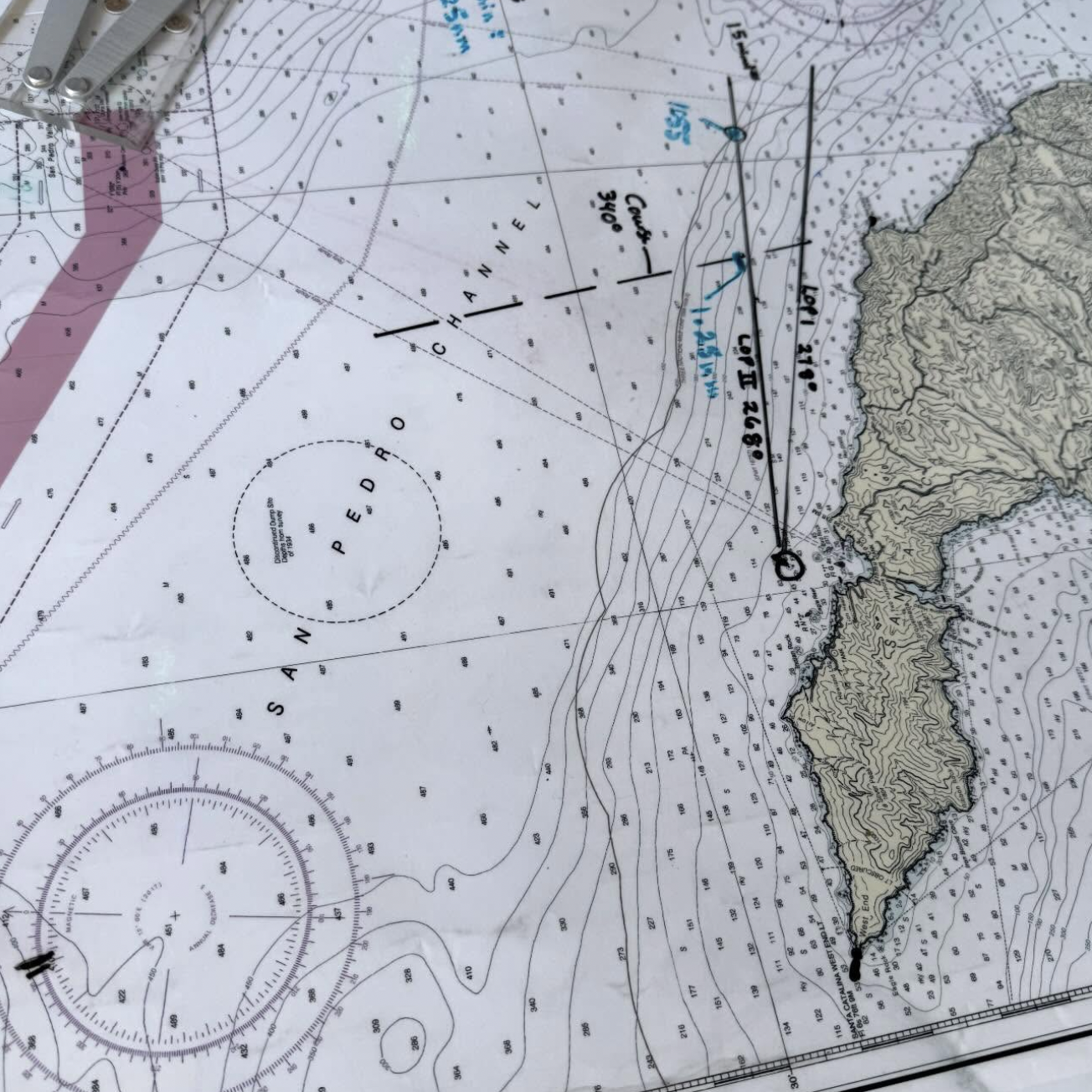 San Pedro Channel nautical chart.
Out soon.
|
March 30th, 2026 - Dredge
Summary
I’m not sure if this was its intention, but Dredge gives me a (cautious) sense of comfort - even despite the various Lovecraftian horrors. It might be due to the calming soundtrack or the soft bells that announce the morning. It could also be from the simple fishing mechanic that feels so satisfying to master. Whatever the case, the strange comfort I feel is perfectly paired with the horror elements, and I get a visceral sense of dread whenever something uncanny happens. Dredge is a single-player horror fishing game, where you sail out and fish or dredge the waters, come back to town and sell your catch, then use the cash to upgrade your boat to get out farther. Between all of this, you also have to manage quests from the different village NPCs, be careful not to hit rocks or cause damage to your vessel, and don’t stay out at night. You really shouldn’t. The mechanics form a tight system that allows the player a lot of freedom of choice, while also giving some sense of structure through the NPCs' orders. The given map also displays your location automatically, and promises islands out of your reach when you first start exploring. 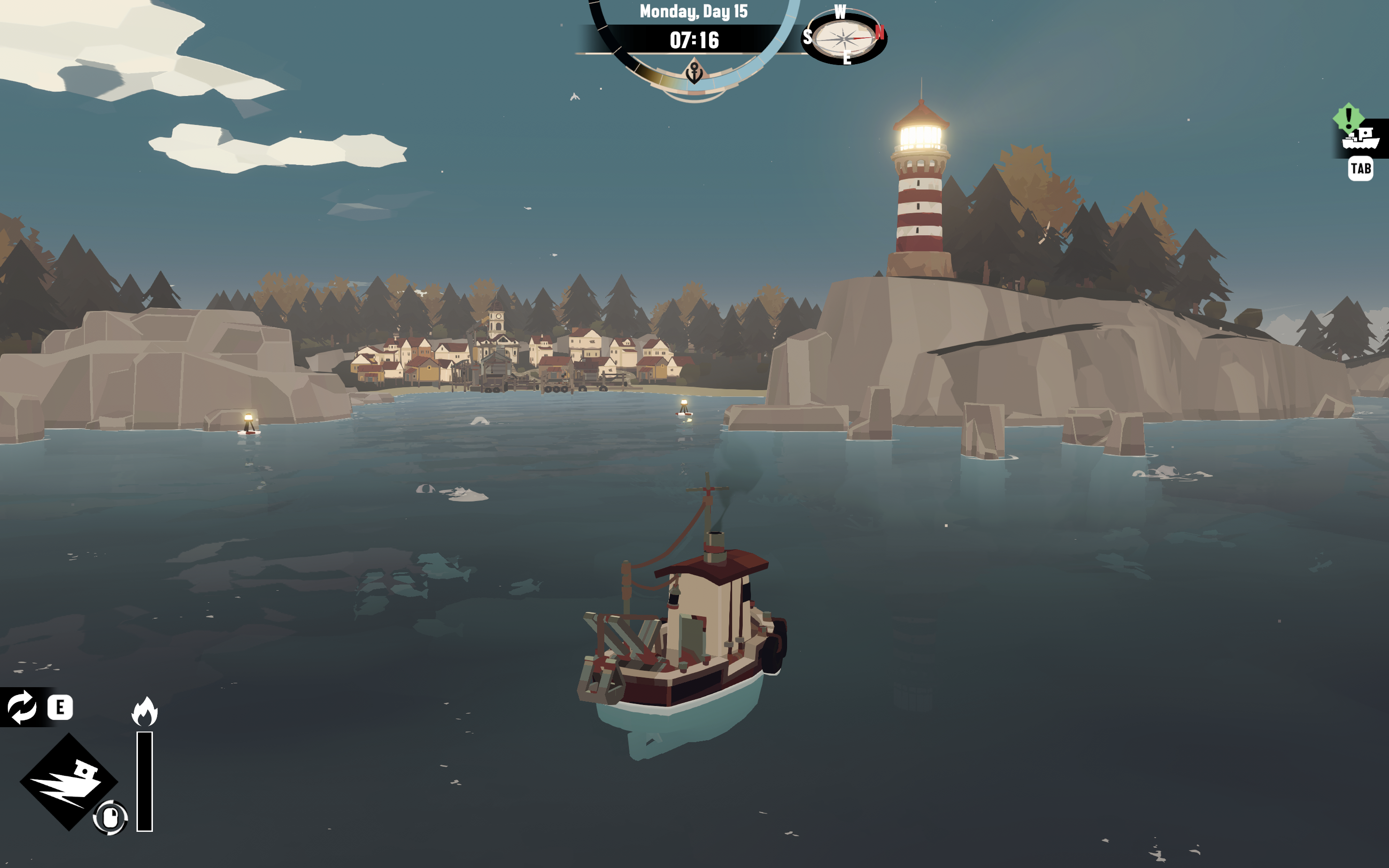 The main mechanic I found most innovative was the horror atmosphere/sleep management system. Sleeping, honestly, feels useless at first. It is pretty much pitch black at night, and rocks can seemingly come out of nowhere, but it’s more time to make money so why not do so? It’s not horribly difficult to stumble on a fishing spot in the dark, and there are certain fish that can only be caught at night anyway. But not sleeping has pretty dire consequences for your character’s psyche, causing them to see…things. And what I love about this system is it’s entirely the player’s fault. There’s no unfair roll of the dice chance you’ll sink your ship just because the horrors say so; every lack-of-sleep instance or ship damage from rocks is because of the player’s choices. Another element of horror Dredge does incredibly well is the corrupted fish you have a chance of catching. They are grotesque, horrid things that get pulled up with an eerie sound effect cue. You almost wish they didn’t fit in your boat. It’s a small event (at least at the beginning of the game), but it so clearly reminds you that this game is not meant to be comforting, or cozy, or calm, but terrible and ugly. 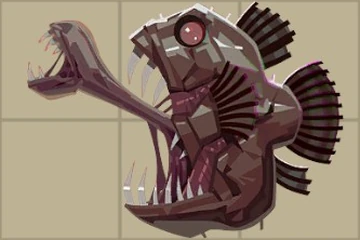 A corrupted fish. Setting really is everything when it comes to horror. Figuring out how to design horror environments when the only setting is an ocean isn’t necessarily a challenge, but it does present multiple limitations. Stuck in Irons will be set entirely on the open ocean. No other ships, no land, just emptiness. Even with the ability to interact with your crew members and the constant presence of other characters, solitude on the open ocean gives ample opportunity for horror. In Dredge, it’s heavily implied that you are the only boat willing to go out and fish. At night, however, there’s a small chance to run across a ship that blows a foghorn to grab your attention, then disappears without a trace when you get near. This small event is incredibly unsettling and reminds the player that nothing is certain at sea, and they might not be able to tell what’s real. The main experience goal that I am working towards is that the player will feel a sense of unease as they navigate the open ocean to fix research buoys, while attempting to regain contact with…anyone, really. At the same time, they should feel comforted by their crewmates, enforcing the mentality that not all is lost. Being stuck at sea with no comms is immediately a pretty tense situation for the player to be in. However, there is an innate beauty about the sea, sailing on open water, and being surrounded by other characters that will keep the player grounded. Designing a successful horror environment that is also cozy will definitely be a challenge, but I will keep Dredge in mind while doing so. 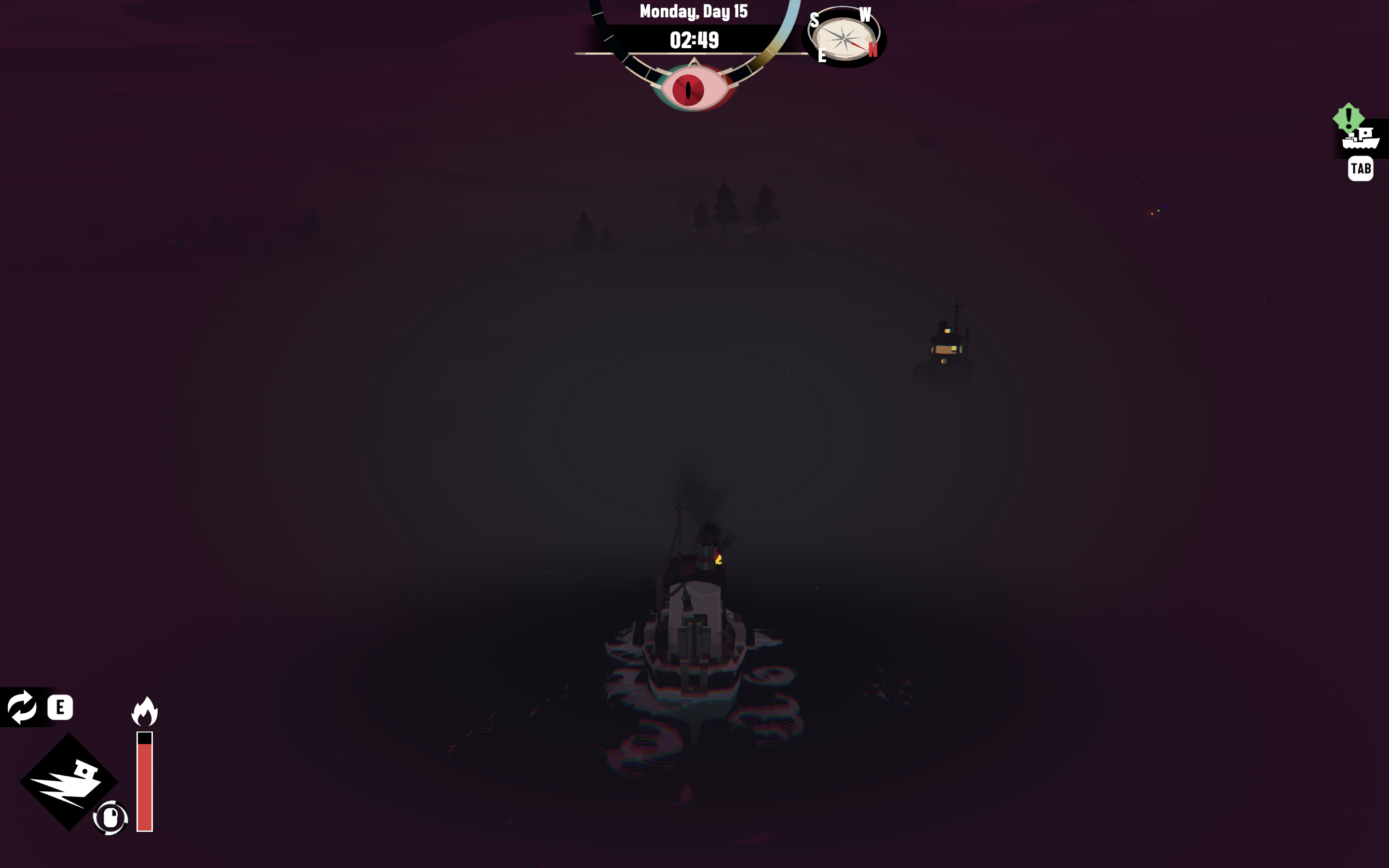 A ghost ship in the distance. The ship in Dredge is a small powerboat made for fishing, only equipped with a cabin for steering and a below-deck space for storing catches. It’s a very simple ship, but very versatile, with many different upgrades available depending on how you want to play.
Out soon.
|
April 6th, 2026 - Blackwake
Summary
I must admit something terrible. I did not play this game. Or rather, I literally couldn’t because all the servers have shut down, and the game has been dead for probably 3 years at this point. However, I did play the single-player tutorial, in addition to watching multiple captain gameplay tutorials to get the gist of it. In its heyday, at least, Blackwake was a 13 vs 13 PvP game where you play as a crewmate (or the captain) on various types of ships and engaged in battle against enemy vessels. You could have up to four ships battling each other at a time, which obviously became very chaotic very quickly. One player would be designated as captain to shout orders to the crew and steer the ship. I spent most of my time in the tutorial fixing sails, shooting cannons, climbing around the ship, and I got to board the enemy ship (at which point the game stopped working. Yay!) 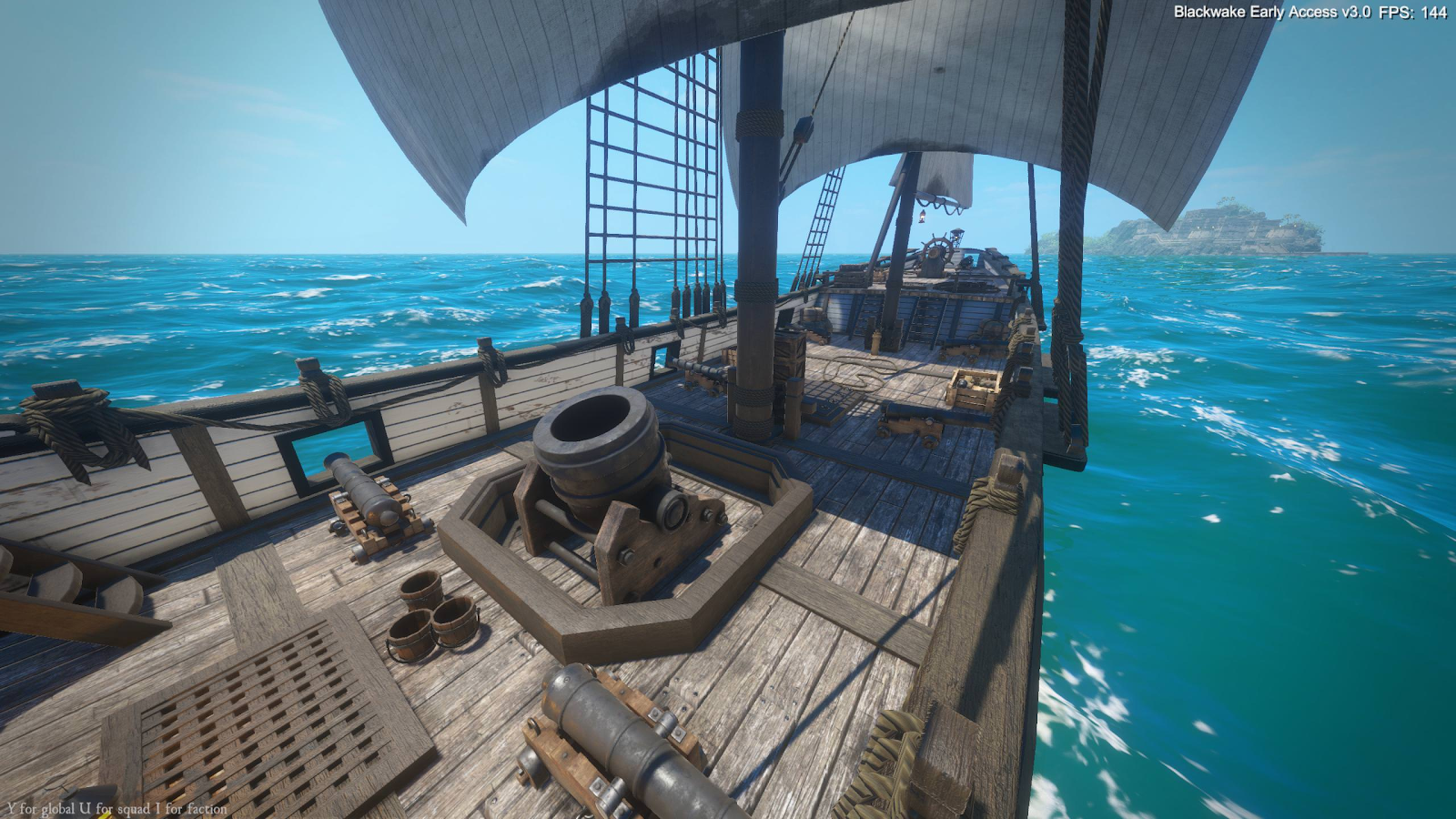 The main mechanics I found appealing are the repair jobs around the ship, as well as the general role of captain in organizing and ordering around the crew. For repairs, I specifically enjoyed climbing up into the sails and fixing holes and tatters. I appreciate that the design of this mechanic affects other aspects of the battle (the fewer holes a sail has, the faster the ship can go), which puts a sense of urgency on players to get things fixed quickly. For the captain role, I thought it was fascinating to see the organization and awareness that players must have for their surroundings. And, on top of that, the captain has to manage real people. All they can really do (besides steering the ship, which is a captain's exclusive job) is shout orders and point out danger and ask for help and just pray they’re listened to. They also have to protect themselves to the best of their ability, while also attempting to constantly assess the situation and adjust accordingly. 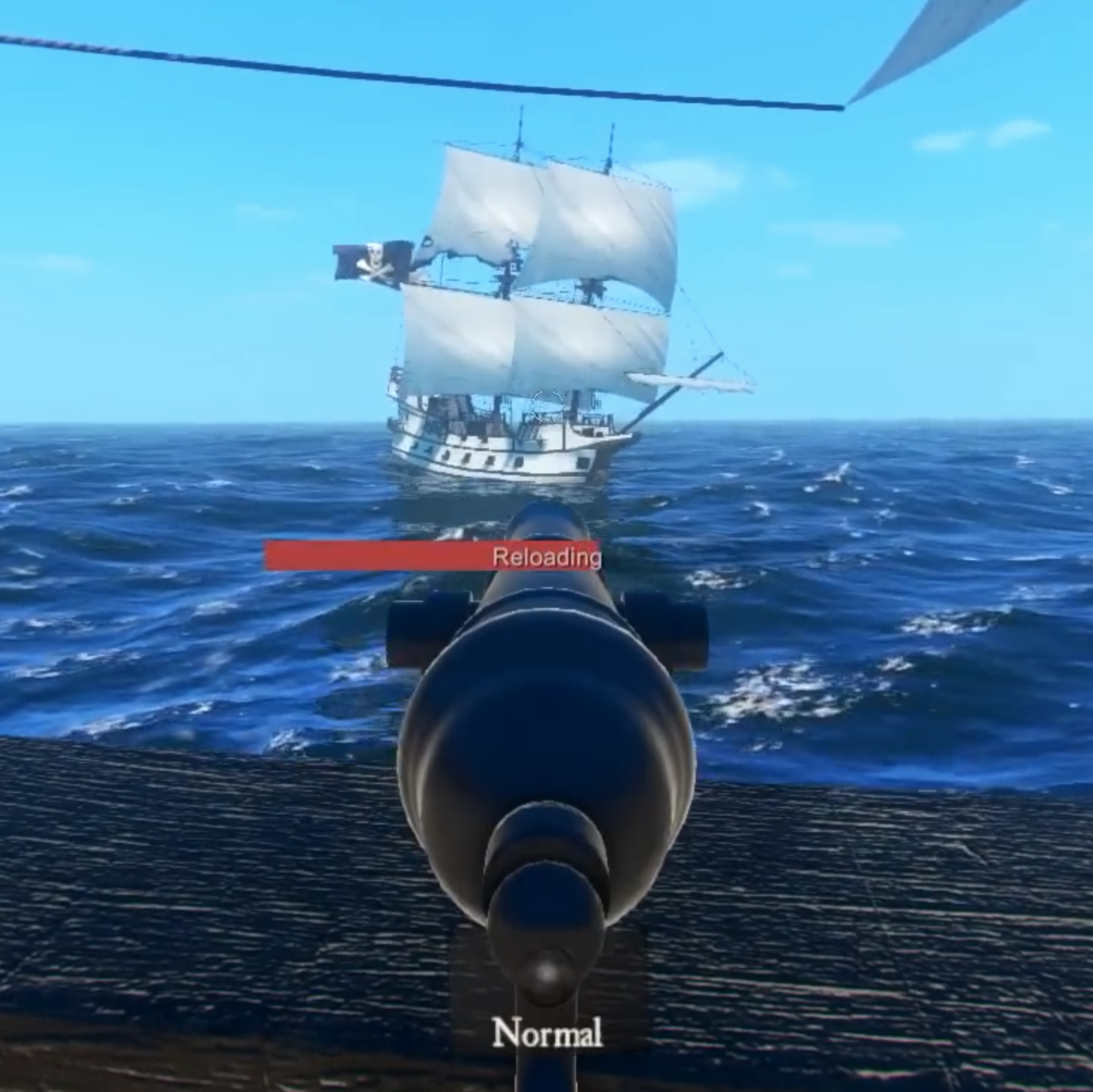 Shooting an enemy ship. I do think the actual mechanic of repair was a bit simple (just hold E for 3 seconds), but this was a necessary design choice because of the real-time aspect and time pressure surrounding the player. I will be taking the idea of this mechanic and expanding it to take more time, to make the player feel like they are actually fixing something that is broken. I went on a sailing voyage in late February, and the main thing my captain said she hated about the job was when things broke. Having the player constantly checking and double-checking their surroundings is a good way to push them to explore their ship and get comfortable identifying problems when they arise. I would like to utilize a similar consequence system to Blackwake’s repair mechanic. Time is a big question for my game; how will players spend their time when they are not navigating or managing crew? If they don’t have much to do, scouring for repair needs will be a lot easier than if they constantly feel like they’re doing something. For managing the crew, I will have a few key NPCs who will have very specific jobs, whom the player will manage. So, considering a perfectly designed Blackwake team with the best captain and most responsive crew, the systems will actually be very similar. My crew will have jobs such as raising and lowering the anchor, as well as raising and lowering the sails. The captain will also manage navigation, course plotting, and steering, though I want to make it a bit more realistic compared to Blackwake. 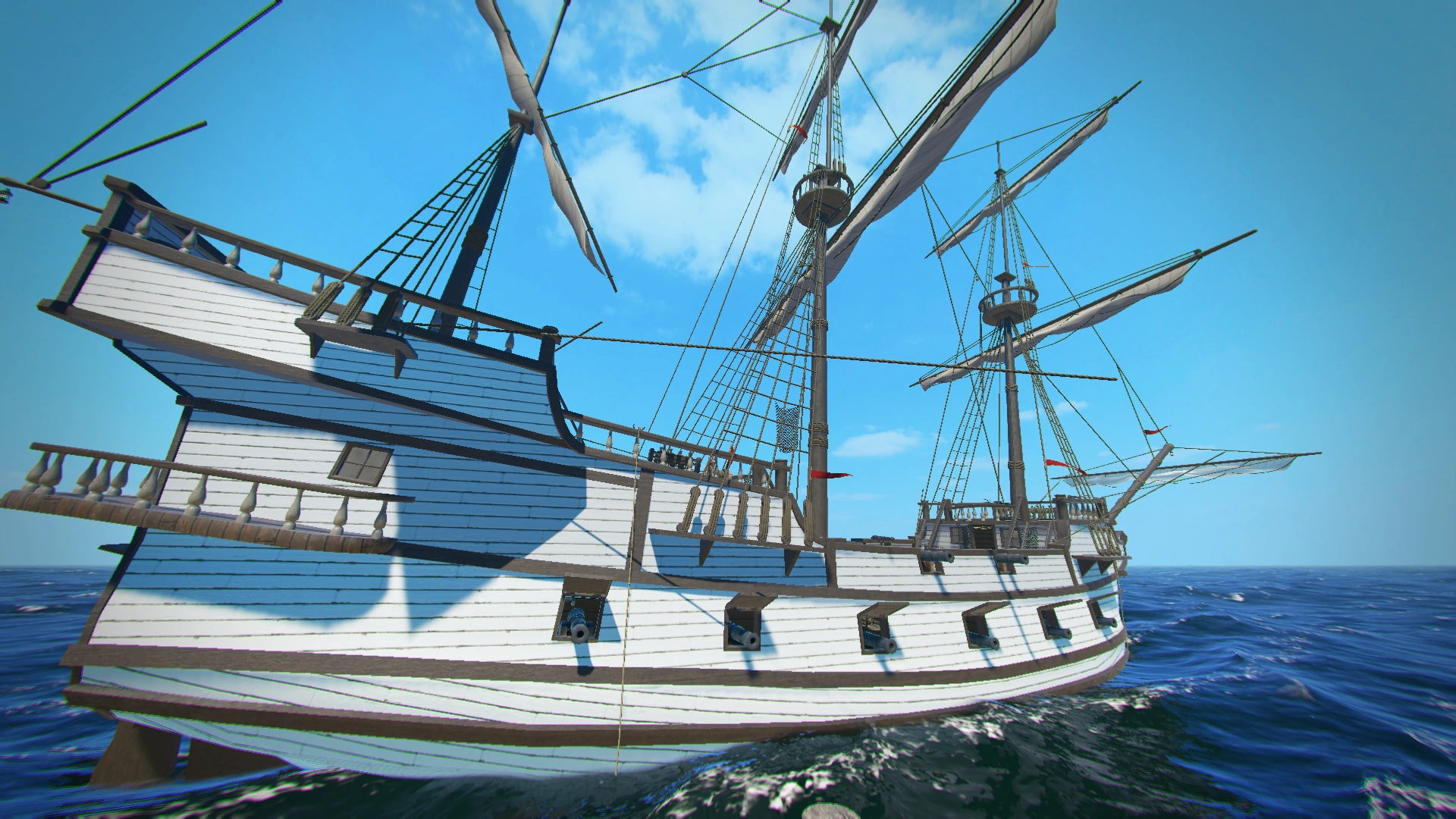 A Galleon. Blackwake offers various ships that give different advantages or disadvantages depending on their build. My favorite is the Galleon, a triple-masted, multi-deck ship with square-rigged sails. It’s the only ship in the game with a completely enclosed cabin below deck.
Out soon.
|
April 13th, 2026 - Voices of the Void
Summary
Voices of the Void (VotV) is NOT a sailing game. There aren’t any nautical ships to be found. However, there’s an absurdity to this game, a looming promise of danger in a supposedly empty landscape, that results in a strangely cozy horror game I just can’t seem to put down. VotV is essentially a job simulator, where you play as a lone researcher in a remote base collecting signals from outer space. You complete a wide variety of mundane tasks, from driving your ATV to different satellite dishes every day for routine checks, to transformer and power repairs, to cleaning up your base. All while doing this, you begin exploring the surrounding area, an expansive forest with not a hint of wildlife. You are decidedly alone. There is no ambient music track to keep you company like every other simulation game. It is you, your ATV, and the signals from outer space. You have 14 full-day cycles, 2 whole weeks, where everything seems mostly fine. Then things get weird, and suddenly you know you aren’t alone, but you can’t pinpoint where or how or why. The false comfort of the initial quiet builds up a perfect atmospheric horror game, where your worst enemy is you and your overactive imagination. 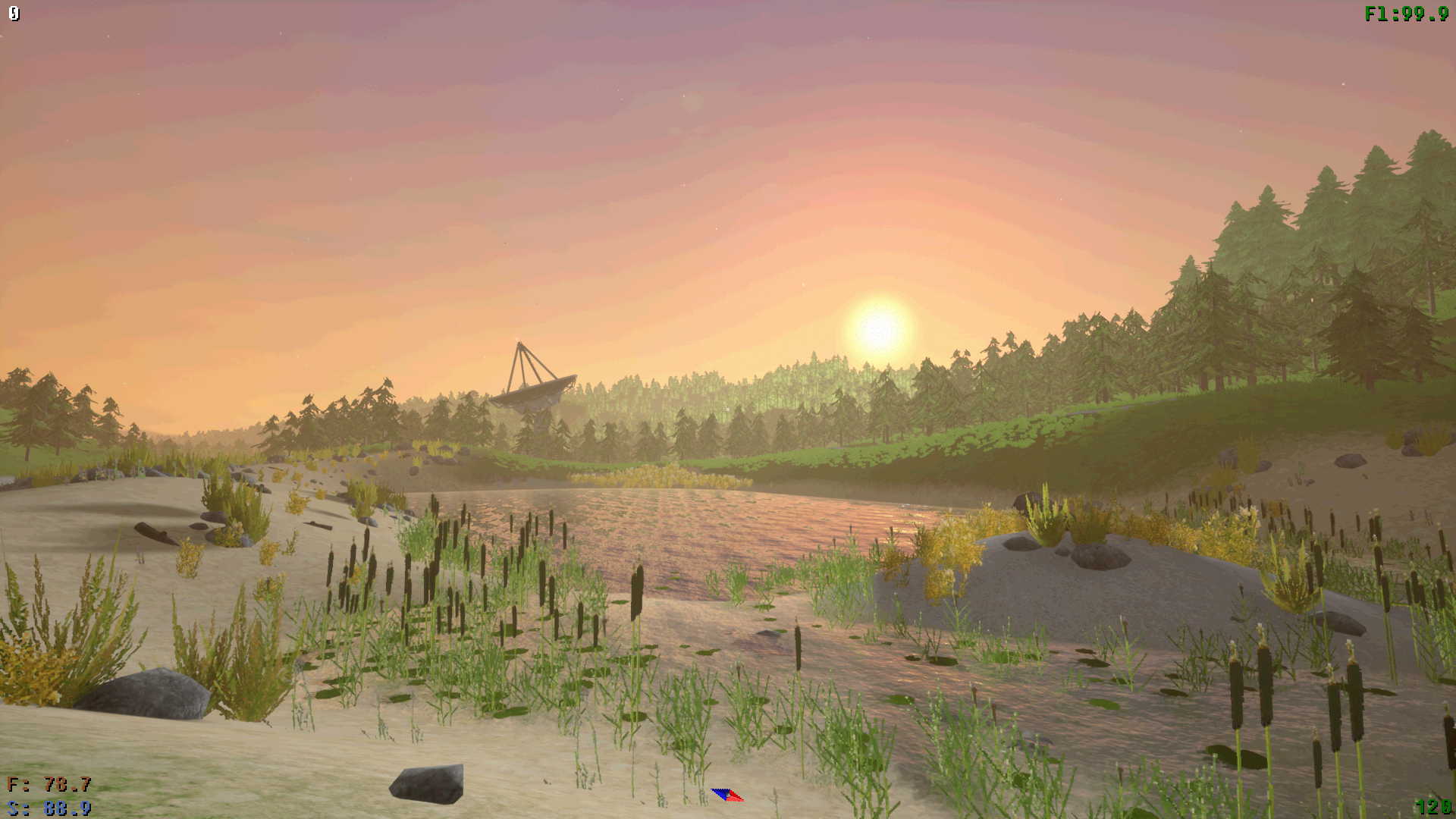 There are a multitude of complex systems in VotV, as well as narrative beats that I think are incredibly innovative for the genre. I greatly enjoy the design of the task system and day/night cycle, which gives a loose game loop and structure to playthroughs. Despite the outside horrors unfolding right outside your door, you still have to gather the requested data and process a certain number of signals. It also gives a great grounding point for players when they feel overwhelmed by choice, which this game has in abundance. One day/night cycle is also 45 real-life minutes, which gives the player a lot of time to get everything accomplished, but also not feel like they’re waiting around to sleep so the next day can start. Finally, there’s a potentially unintentional narrative arc about companionship and reliance, and what happens when your routine gets disrupted, which is what makes this game so special. There is a very important late-game crafting recipe, the Kerfur-Omega, which is a robot that will essentially do your tasks for you. Your workload becomes nonexistent, allowing you to spend more time on cleaning, decorating, and exploring. Sure, the robot is a bit uncanny, sometimes coming back to base after doing tasks and standing right behind you (which is a certain jumpscare for me, at least). But it’s a companion, and you finally aren’t alone. Until one day it gets taken or hidden or broken (there’s a variety of ways you can lose Kerfur, sometimes even permanently). You’ve gotten so complacent working like a well-oiled machine with your companion that to take that help away, especially while everything else is horrifically going to pieces around you, is devastating. 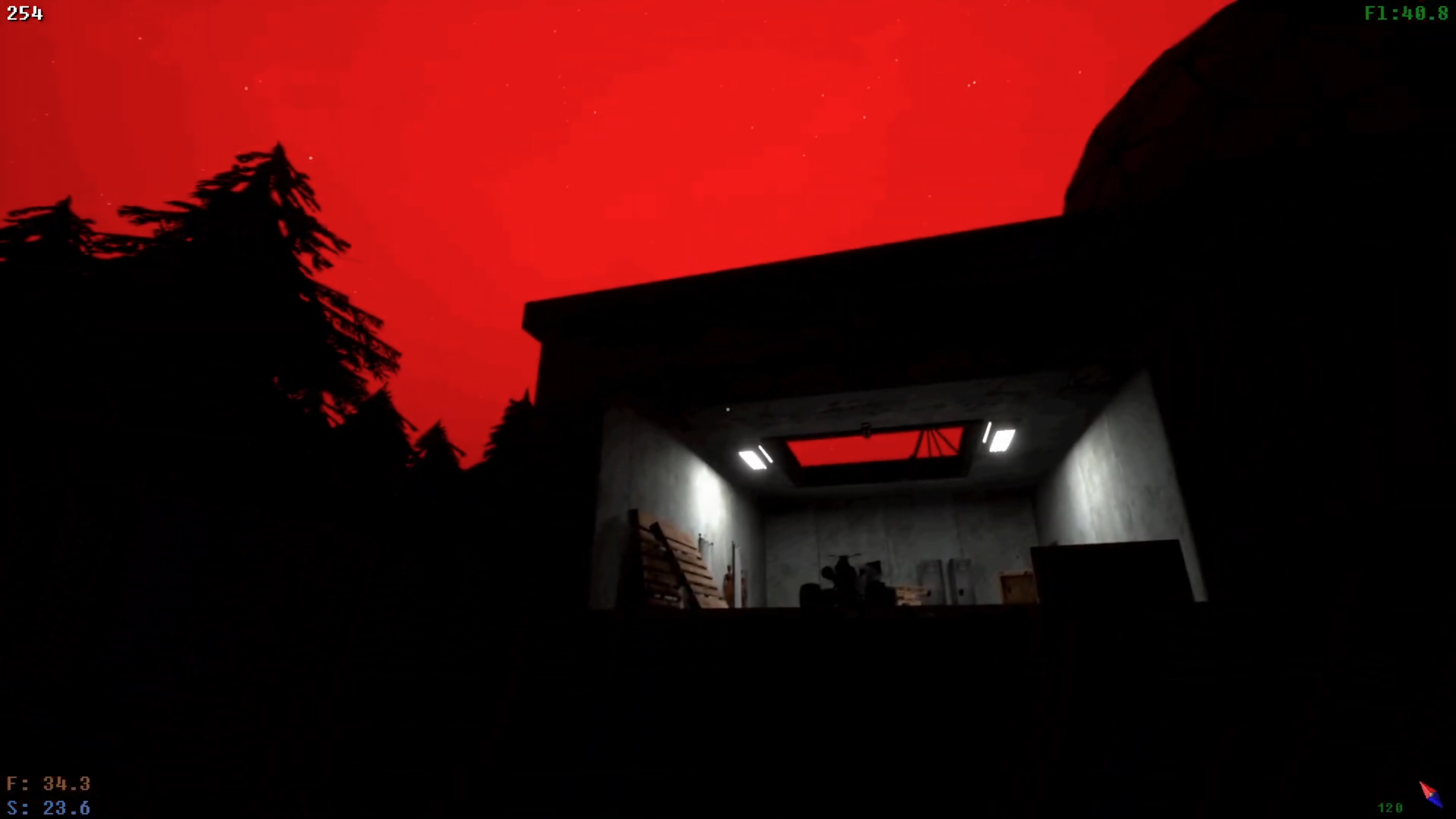 Red sky event. Time is a big issue for my game’s design. How will players spend their time between tasks? In Voices of the Void, this answer is easy. The map is huge. Players have lots of choices for where they want to go and do because of this. Being on a boat doesn’t allow for this. The confined, limited space makes it much harder to implement a variety of choices. Still, real-life sailing crews did have a variety of options. The player will be able to clean, make repairs, play games with the crew below deck, talk with the crew to learn more about them, climb around and explore the ship, etc. I also want to incorporate a similar day/night cycle, as I think that will create a good space for the player to slip into an easy routine. Here, though, there are more interesting things to do on a ship at night than just sleep. With anchor down, the player will have to take important data like position and bearings to make sure the anchor is tethered properly, and record information such as sea state, wind direction, and barometric pressure. 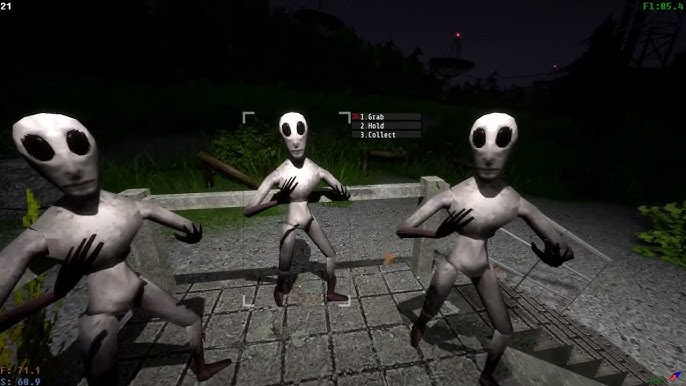 Paper aliens that real aliens leave as gifts. As of right now, there are no sailboats in the game - unless you want to print one with the industrial-strength 3D printer (I’m not kidding). Ships from outer space, however, are frequent. If we’re counting those, the warp arrow is my favorite.
Out soon.
|
April 20th, 2026 - Iron Lung
Summary
As much as I want to say that Iron Lung is not a sailing game…it does kind of have the right idea. In Iron Lung, you play as Simon, a convict sentenced to be welded into what is basically a metal coffin, and sent to the bottom of a blood ocean to look for…anything, really. You have no view of the liquid you are submerged in; instead, you use an X-ray camera to take photos of the sea floor. You navigate through tight canals with a paper map and glowing coordinates on your dash, only able to speed up, slow down, and rotate. Your objective is simple: take pictures at the marked coordinates on the map, and you get to go home. There’s a specific type of terror that comes from being blind to your surroundings, but it’s also a weird kind of comfort. It’s convincing to think that “if I can’t see it, it can’t hurt me” and that semi-comfort carries through the game’s entire playthrough. You sense the danger all around you, but even with the oxygen slowly depleting, you feel semi-safe in your iron lung. At least whatever’s out there can’t get inside. 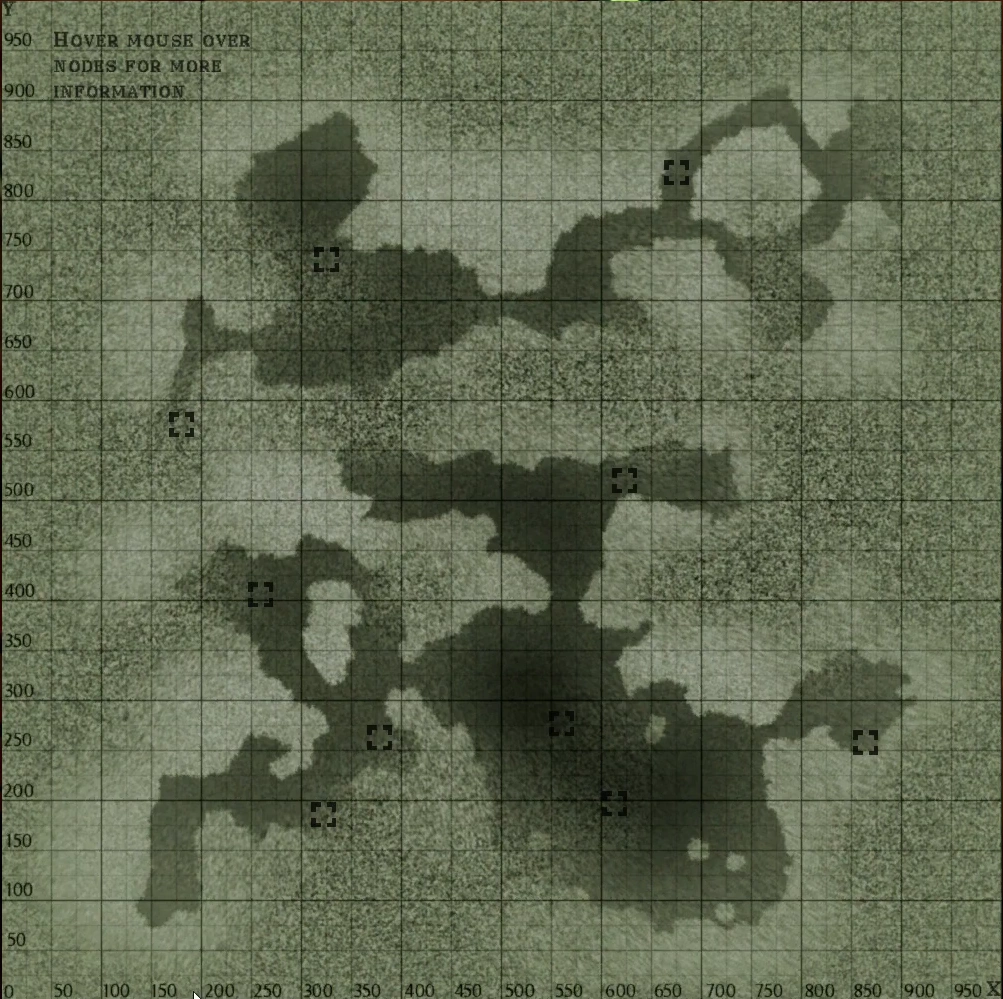 Navigation chart with waypoints. The entire game loop of Iron Lung revolves around plotting a course to a target, moving down that course, and adjusting as necessary. Then you engage with the target via the camera, earn a green check on the map, and plot to the next. There is a set number of targets, and checking each off makes the player feel a sense of completion and renewed hope that there are just a few more to go until it’s over. I think both the navigation and tasks are designed very well to give the player something to constantly focus on. For movement and navigation, the capsule doesn’t move unless the player presses forward. This means that whenever the player wants to move, they can’t be doing anything else, like checking the map for a wall. There are proximity sensors that tell you if you’re too close to something, and you can see your coordinates on the dashboard. However, there’s a frantic feeling that comes from switching back and forth between the map and the coordinates and your destination, and hearing the proximity sensor go off all of a sudden, even though you haven’t moved, which means that something else did. It’s horrifying (and really, really well executed). It also gives the player a bit of choice when it comes to their actions. Besides the oxygen counter going down, the pressure to move feels relatively low. You can stop in (what you think is) a large cavern, poke around the ship for anything interesting, and plot a course before moving again. Even though these choices are pointless and you’re hurtling towards certain doom regardless, the illusion of agency is important to make the player think they are still in control. 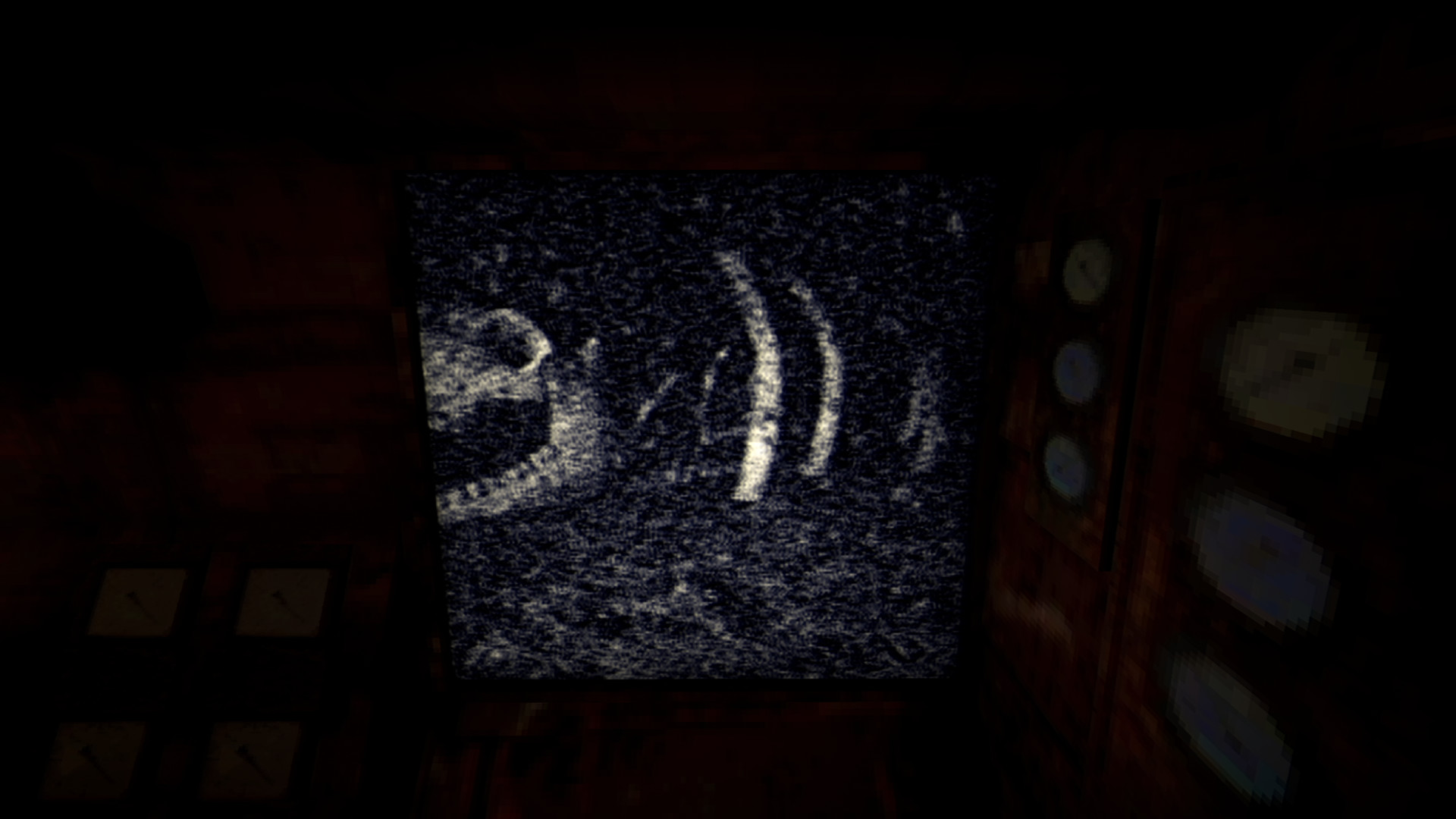 Photo taken for a task. I think mundanity and routine in absurd situations is such an interesting concept to explore both narratively and mechanically. I want to incorporate a similar type of task system, but have the tasks spawn randomly instead of having a set number to complete. This will require some other form of progression to make the player feel like they’re working towards something. While I’m not quite sure what that will look like yet, having some sort of upgrade system that can slowly make the player’s job easier and give them more time to do other things is a good place to start. To start out, the actual navigation mechanic will be fairly complex, requiring the player to plot their course using triangulation and calculating distance and bearing and such. I would also like the player to have to check their speed and progress with a dead reckoning (DR) using their previous information. Over time, it would be nice to give the player upgrades to make parts of that system easier, so it doesn’t take the routine away, but lifts some of the weight. 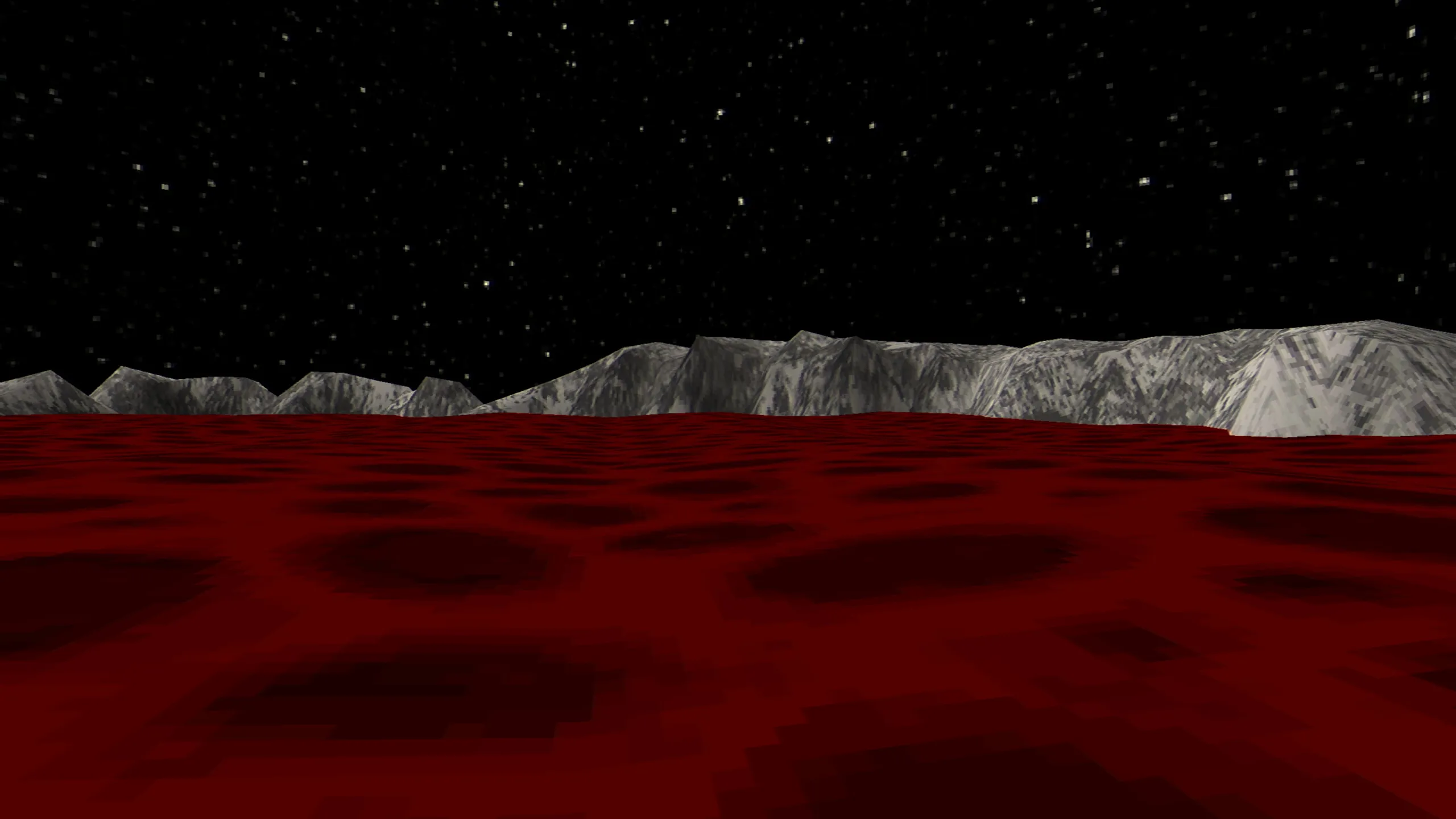 The blood ocean. The iron lung is…certainly a vessel, to say the least. It has coordinates, an engine, and a computer in the back, and more or less functions like a deep-sea diving contraption. Besides the fact that you’re welded in, of course.
Out soon.
|
April 27th, 2026 - Sailwind
Summary
Sailwind is the last game in this series because I really, really didn’t want to play it. I only heard about this game from doing initial market research for this project. And, when I read “sailing simulator featuring realistic sailing physics and a vast open world to explore,” I kind of threw my hands up and went ok so that’s literally the game I want to make. And at its core, the one-sentence logline description is very similar. Stuck in Irons is also a realistic sailing sim. With a task system. And day/night cycle. And a big navigation component. But who asked?? Shush. I also didn’t want to play it because it was 20 whole dollars for a game that is still in early access (the label for an unfinished, in-progress game that still wants user feedback). But hey, for the market research, we persevere. Besides being a realistic sailing game, Sailwind is a delivery game, asking the player to pick a directive, fill their ship with the packages, and set sail to whichever island requested it. The navigation was a bit jarring to use, as sometimes I just wanted to be able to set the map down and rotate it to face the direction I was heading. But the compass and general spatial orientation were intuitive, and just being on the open sea was quite beautiful.  Sailing on the open ocean. The primary goal when playing this game was to better understand how to handle the realistic physics, such as wind and water, and how to design ship management with the sail, halyard, and sheet winches. Sailwind kind of just throws you into the thick of it and asks you to figure it out yourself, which isn’t actually too terrible. Hand-holding and over-tutorialization in games with complex systems are sometimes overrated. Besides, all of the nautical terminology was easily deciphered from watching what the actions do; the halyard winch raises and lowers the sail, and the sheet winch rotates the sail, allowing the player to adjust for wind direction. The wind and sea simulations seemed tightly connected with the ship construction and each other, making a very satisfying experience for the player to experiment with in all sorts of different conditions. The other reason for playing Sailwind was to see how navigation was handled. It is entirely analog, with just a map and a compass. As I said above, it was mildly frustrating to use the map because I couldn’t draw on it. And if I got lost, I’m pretty sure I would have to restart the whole game  One of the sail winches. Seeing how navigation is handled in other games gives me a good starting point for what to do (and not do) when it comes to making such a system. I want the player to be able to draw on the given charts, plot courses, use their compass to pinpoint locations accurately, etc. Having been on a ship and getting the opportunity to do these things first-hand will be very helpful when designing such a system. To combat the whole “getting completely lost thing,” I plan to sprinkle buoys or other nautical POIs so that the player can use their surroundings to figure out where they are (through triangulation). In a different vein, seeing the sail work with the wind and sea sim was incredibly helpful. In my game, I want to have the captain ordering the crewmates around, instead of just two winches to maneuver the sails. My ship will also be much bigger than the boat I used in Sailwind, which will require multiple people to handle the sails anyway. A few problems I will have to tackle are how to design the sea system so it feels fair, and also what to do at night. Night in Sailwind can be slept away, and the ship will keep moving. It would be fun to implement a star navigation system, but I would rather the player anchors up and takes data measurements of position, wind speed, bearing, distance to arrival, etc, as an interesting extra task. But asking the player to stop at night when they’re already going might be difficult. Then, for the sea system, I don’t want the wind to ever accidentally work against the player's goal, so balancing realism with practicality for the benefit of the player experience will be very important to get right. 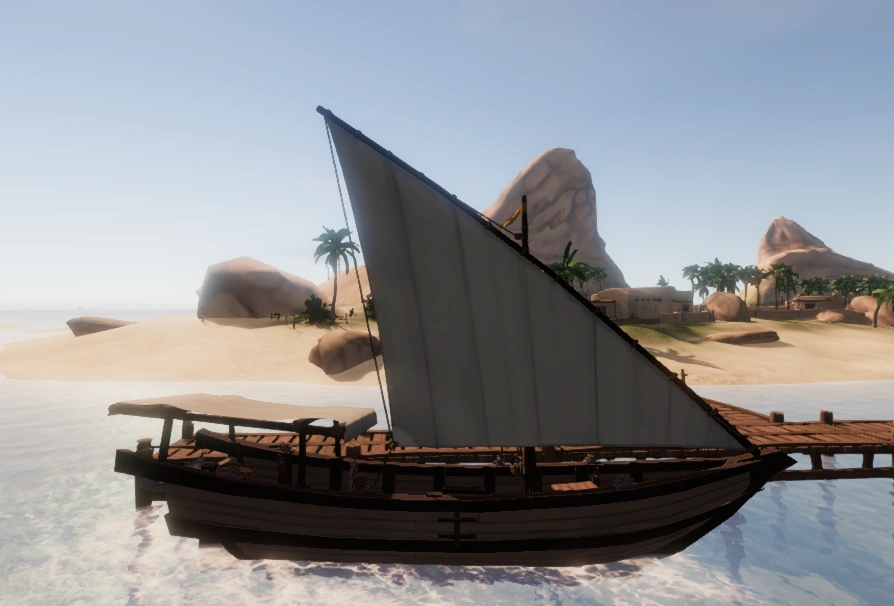 A Dhow The starting ship in Sailwind is a small Dhow, with a single large lateen sail that can be raised, lowered, and rotated with the given winches. It has no interior, requiring all cargo to be placed somewhere on deck. It’s a bit cramped, but it’s a cute little ship and a good starter for the game.
Out soon.
|